
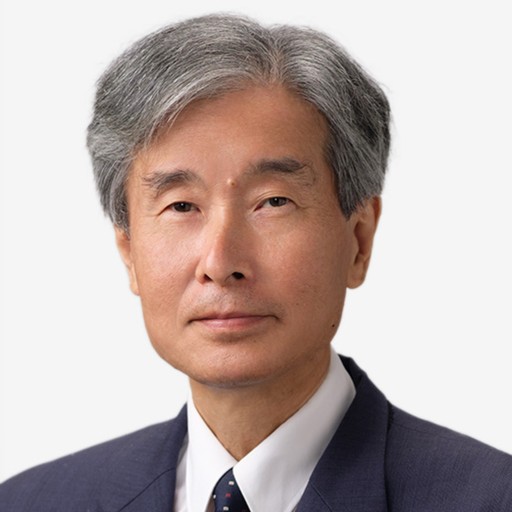
Tetsukazu Yahara
Director , Fukuoka City Science Museum
Born in Fukuoka Prefecture in 1954, Tetsukazu Yahara graduated from the Faculty of Science at Kyoto University. After serving as an Assistant and Associate Professor at the University of Tokyo, he became a Professor at Kyushu University in 1994 until retirement in March 2020. In October of the same year, he was appointed as the Director of the Fukuoka City Science Museum. Yahara is the author of Introduction to Conservation Ecology (in Japanese) and Decision Science for Future Earth (Springer). He specializes in ecology, evolutionary biology, and sustainability science.
Since 1999, he has led a biodiversity conservation project at Kyushu University's new campus development, under the goal of "No species loss, no forest loss". This initiative achieved a balance between large-scale development and biodiversity conservation. As a member of the DIVERSITAS Scientific Committee, Yahara organized a pre-conference meeting for scientists in preparation for the 10th Conference of the Parties to the Convention on Biological Diversity in 2010. He served as Chair of the Asia-Pacific Biodiversity Observation Network from 2009 to 2020, promoting international biodiversity observation initiatives.
Yahara is a recipient of the Cabinet Office's Green Academic Award and the Matsushita Konosuke Flower Expo Memorial Award.
Sessions
From outreach to co-creation: Lessons learned from science education programs for children in Fukuoka City Science Museum
Science communication and outreach are regarded as the practice of communicating science-related topics from scientists to wider, non-expert audiences. However, in the process of solving social problems, interactive collaborations between scientists and stakeholders, including the co-design of research and the co-creation of new knowledge, are required. In my keynote address, I will first introduce my experiences in co-design and co-creation while developing the Biodiversity Conservation Project at the Ito Campus of Kyushu University. This project was promoted in collaboration with citizens as well as university students. As a result of this project, approximately 100 hectares of forest and other natural vegetation have been maintained as a Biodiversity Reserve on the Ito Campus. This reserve is now being utilized in science education programs for children at the Fukuoka City Science Museum. In these programs, we aim to nurture children's curiosity and creativity through various experiences in forests, rivers, and other natural settings. Additionally, we are working to develop conservation-oriented research with children by co-designing monitoring plans and co-creating new scientific knowledge. From these lessons, I emphasize the importance of considering stakeholders as active partners in co-creation, not passive audiences of science communication and outreach.